
Which Georgia Public Records Can Be Reached
Georgia divides custody by office and jurisdiction. County superior-court clerks record land instruments and keep superior-court files. Probate courts hold wills, estates, and marriage licenses. Tax assessors maintain ownership rolls, while sheriffs control jail and incident material. State offices are the main source for corporations, professional licenses, prison information, the offender registry, and modern vital certificates.
| Georgia record group | Official keeper | Web route | Practical access |
|---|---|---|---|
| Deeds, liens, and plats | County superior-court clerk | GSCCCA for participating counties and series | Index access varies; clerk supplies copies and certification |
| Court cases | Clerk of the specific court | Provider linked by Georgia Courts E-Access | Vendor, clerk counter, or records request; sealed files excluded |
| Property roll and GIS | County tax assessor | County QPublic, Beacon, local assessor, or GIS site | Current roll is generally viewable; certified data by request |
| Probate and wills | County probate court | County site or vendor, where offered | Coverage is uneven; older books may require court or Archives access |
| Birth and death certificates | Georgia DPH or county vital office | Ordering service, not a public browse index | Identity and eligibility rules apply |
| Prison and offender data | GDC, GBI, or county sheriff | State tools plus county rosters | Published facts only; protected files remain closed |
| Businesses and licenses | Georgia Secretary of State or licensing board | Statewide entity and license searches | Index is free; filing copies may use an order process |
Open access does not mean that every field is disclosed. Juvenile and adoption files, sealed cases, active-investigation material, protected victim data, motor-vehicle personal information, account numbers, Social Security numbers, and medical details may be withheld or redacted. A public index also is not the same thing as the official document.
Georgia Public Records Begin With 159 Counties
Georgia has 159 counties, so custodian selection is not a minor step. It is the core of the records system. A deed follows the county where the land lies, a lawsuit follows the court that heard it, and an estate follows the appropriate probate court. Metro Atlanta adds another wrinkle: an Atlanta mailing address can point toward Fulton, DeKalb, Cobb, Gwinnett, Clayton, or another county, and the postal label does not prove city limits.
Index: a finding aid with names and a citation, not necessarily the document image. Certified copy: an official copy authenticated by its custodian. Custodian: the office responsible for a record. Exemption: a legal ground for withholding all or part of a record.
Consolidated governments can also change the label on the door. Athens-Clarke, Augusta-Richmond, Columbus-Muscogee, and Macon-Bibb may use combined government names. Historical work must account for county formation and courthouse losses as well. Tax digests, plats, probate books, newspapers, and later copies can bridge gaps when an early series did not survive.
Searching Georgia Deeds Through GSCCCA
The Georgia Superior Court Clerks' Cooperative Authority provides a statewide gateway for participating county record series. Dates, instrument types, account requirements, images, and fees vary by county, so no single start year describes the whole state. A successful hit usually gives enough citation data to seek the actual instrument from the recording clerk.
| GSCCCA search control | Input | How it narrows the index |
|---|---|---|
| County | Required dropdown | Selects a participating Georgia jurisdiction |
| Name | Text | Searches a grantor, grantee, or indexed party; spelling matters |
| Instrument type | Optional dropdown | Limits deeds, security deeds, liens, plats, or another available series |
| Book and page | Paired text | Retrieves a known recording citation |
| Instrument or file number | Text | Finds a known filing directly |
| Date range | Date pair | Separates people with common names |
A typical deed index shows county, grantor, grantee, instrument type, recording date, book and page, instrument number, and legal-description references. Image access may require registration or payment. When GSCCCA has no hit, check the county's own index, call the superior-court clerk, or request a counter search. A missing web result is not proof that the deed does not exist.
Georgia Court Indexes Are Not Court Files
Georgia Courts E-Access routes visitors to different county and vendor systems rather than one complete statewide party-name database. Coverage depends on county and court class. Common form fields include first name, last name or business name, case number, party type, case type, court, and filed-date range. Some systems require an account or captcha.
A docket may show the court, case number, caption, party roles, attorneys, filing date, judge, status, hearings, and entries. Pleading images can be paid, login-gated, or available only from the clerk. Superior courts hear felonies, divorces, title-to-land disputes, and general civil matters; state, magistrate, probate, juvenile, and municipal courts keep distinct series. Federal cases use PACER and the relevant Georgia federal district, not a county portal.
The fallback chain is provider search, clerk terminal, clerk copy request, and then archives for transferred federal or historical files. Sealed cases, adoption matters, juvenile material, and restricted identifiers are not public merely because a docket system exists.
Georgia Property Rolls Link Owners to Parcels
Each county Board of Tax Assessors maintains its own roll, often through QPublic, Beacon, a local site, or a counter terminal. Common searches accept owner name, location address, parcel number, or legal-description terms. A parcel card can show the owner, mailing address, situs address, subdivision, acreage, values, tax district, sales history, building traits, map link, and exemption indicators.
The mailing and situs fields answer different questions. The mailing address may point to an absentee owner's correspondence address; the situs is the land itself. Ownership and value data can lag a new recording, so a recent transfer should be checked against the deed. County GIS viewers add parcel shape, aerials, zoning, flood, and district layers, but those map overlays are context rather than title proof.
Georgia Vital Records Use Eligibility Rules
Georgia does not provide a general public browse of modern birth and death certificates. Birth copies are limited to eligible applicants under O.C.G.A. §§31-10-25 and 31-10-26. Death certificates without cause of death are generally available under DPH rules, while cause-of-death access is restricted. Marriage licenses remain with county probate courts and divorce files with superior-court clerks.
DPH also holds marriage applications and certificates, plus divorce verifications, for June 1952 through August 1996. A verification is not the full court file. Orders can go through the state online channel for eligible birth and death requests, by mail to the State Office of Vital Records, or in person at state and county offices. Forms call for event details, requester identity, relationship or authority, signature, photo identification, and payment.
The Georgia.gov vital-record guidance updated in June 2026 lists method-specific processing estimates: online service can take two to four weeks, expedited service up to five business days, mail eight to ten weeks, and a qualified walk-in request may be completed the same day. These estimates can change, so check the source before choosing a channel.
Georgia Custody and Registry Lookups Have Limits
No single Georgia tool covers every county jail. Sheriff rosters and records units control local booking and incident information, while the Georgia Department of Corrections search covers published state-offender facts. Georgia VINE offers custody-status notification, but it is not the court file. Booking data shows an accusation or current custody state, not a conviction.
The GBI Sex Offender Registry supplies official registry access for name, location, and other supported modes.
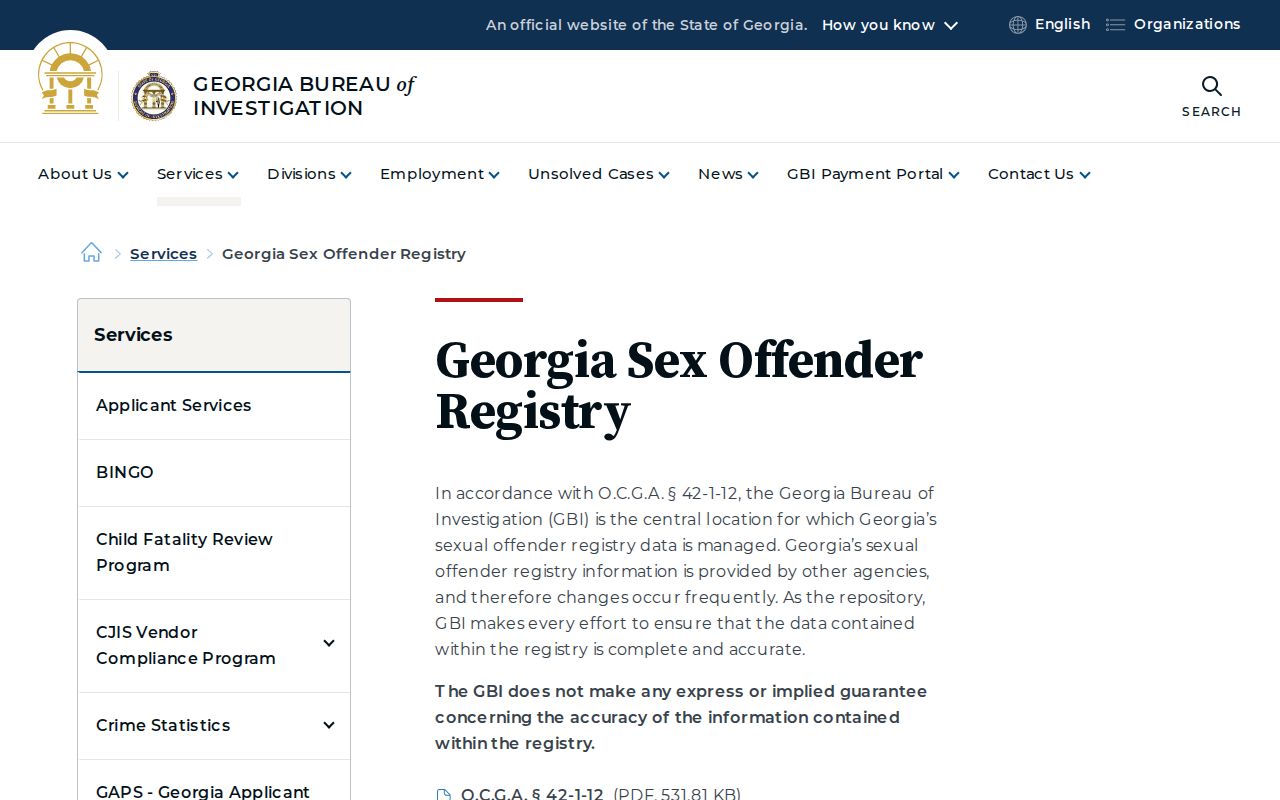
The registry can display identity, photograph, offense, and location fields that law permits, but the county sheriff remains the place to verify a registration detail.
GDC institutional files, security classifications, investigations, discipline, and medical or mental-health material are not part of the ordinary public lookup. For a police report, contact the investigating agency with the report number, date, location, and party names; active-investigation and victim information may be redacted.
Georgia Business and License Public Records
The Secretary of State maintains two useful statewide indexes. Corporations records can connect an entity with registered-agent, officer, filing, and address clues. Professional Licensing Search verifies a licensee's board, license number, status, and published discipline information. These are indexes for source verification, while underlying filings or board records may require a separate copy request.
The Georgia Corporations Division Business Search is the official entity-search starting point.
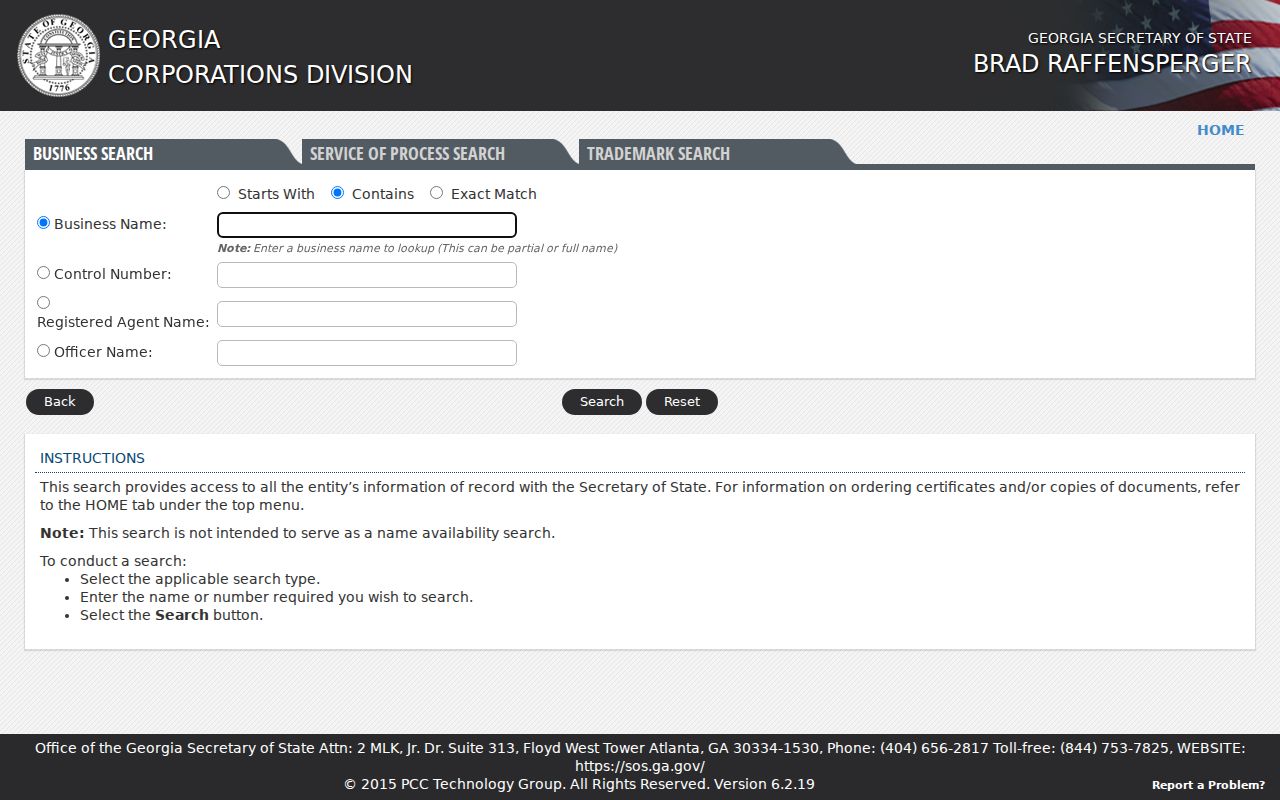
Its result can help distinguish similarly named firms before a request is sent for a particular filing.
The separate Georgia professional-license verification search organizes records by licensing board and licensee details.
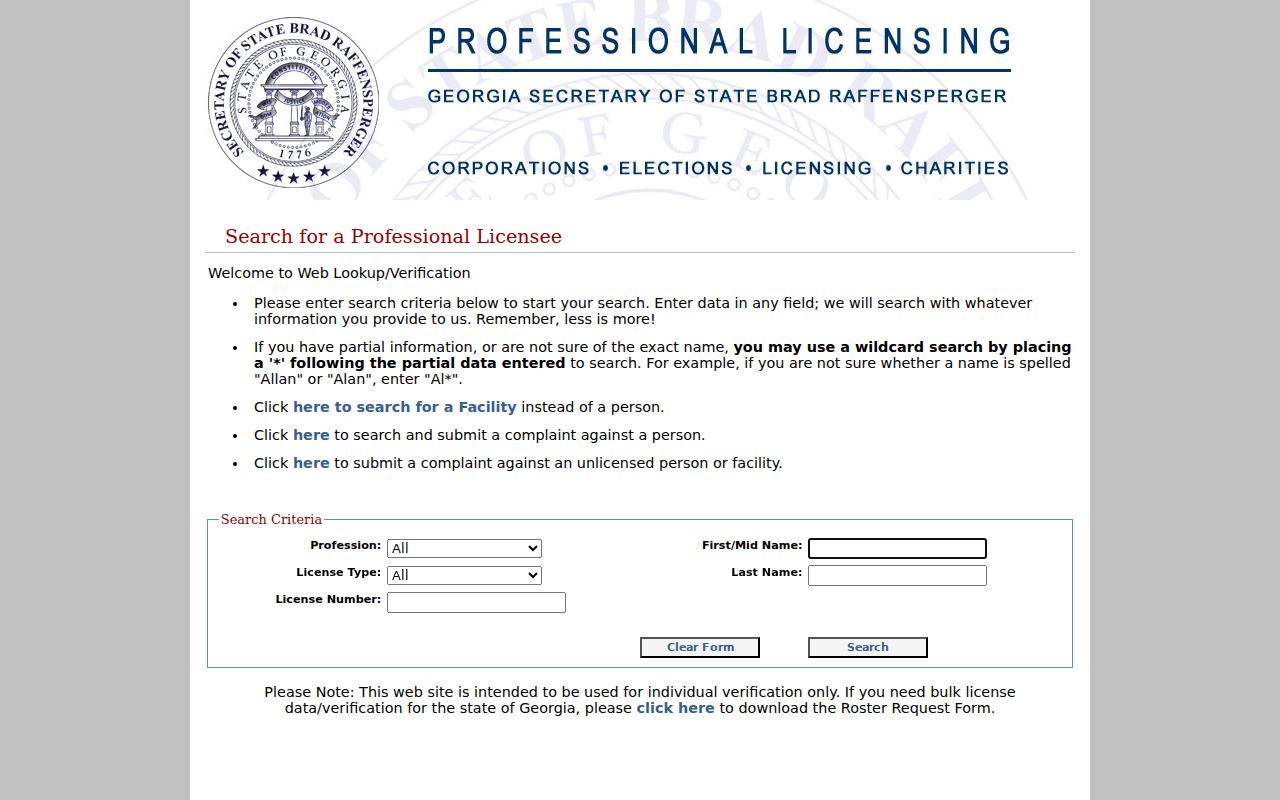
A current status should be read with the named board and license number, not matched on a name alone.
Offices That Deliver Georgia Public Records
The statewide layer is strongest for vital certificates, corporations, licenses, archives, prisons, and the offender registry. County offices still control most deeds, trial-court cases, probate, parcel, jail, and local police material. The Georgia Courts directory and Department of Revenue county property-tax directory help identify the right county office before a request is filed.
County Superior-Court Clerk
Deeds, liens, plats, superior-court cases, and certified copies
Georgia DPH Vital Records
Statewide birth and death certificates and selected marriage or divorce verification
Older material may require the Georgia Archives catalog, county books, microfilm, newspapers, church registers, or cemetery files. For property, use the Department of Revenue county directory to reach the assessor, tax commissioner, and local portal.
GORA Deadlines, Estimates, and Copy Charges
The Georgia Open Records Act, O.C.G.A. §§50-18-70 through 50-18-77, lets any person request an existing agency record. The agency does not have to create a new report or answer a question. Responsive material is due within three business days unless exceptional circumstances prevent production. In that case, the agency must give a written timetable, estimated cost, and the precise legal basis for withholding.
Search, retrieval, redaction, and production charges must be actual and reasonable and use the lowest-paid qualified employee. The first 15 minutes of staff time are free. The Attorney General's guidance describes copying charges up to $0.25 per page, while some agencies publish lower rates. Notice is required when estimated costs exceed $25. Prepayment may be demanded when an estimate exceeds $500 or prior lawful charges remain unpaid.
Cost control. Ask for electronic delivery where practicable, give a tight date range, and name a record series instead of requesting an agency's entire file.
A requester may narrow an expensive request. If access is denied, ask the agency to identify the exact O.C.G.A. paragraph for each withheld part. Enforcement routes can include the Attorney General or a superior-court action.
How to Request Georgia Public Records
A well-formed request starts with the office that actually keeps the record. Portals can save time, but a web search is not a required first step and a no-hit result is not final. Use the agency's designated open-records officer and request an existing record in a format the office can produce.
- Identify the county, agency, court class, and exact custodian.
- Describe the record series, names, date range, and any case, parcel, book-page, or report number.
- Submit through the listed portal, email, mail, or office channel and request electronic delivery when useful.
- Keep confirmation and review the three-business-day production, timetable, estimate, or exemption response.
- Narrow a costly request or seek the precise statutory basis when material is withheld.
The Governor's Office open-records form illustrates a designated online request channel.
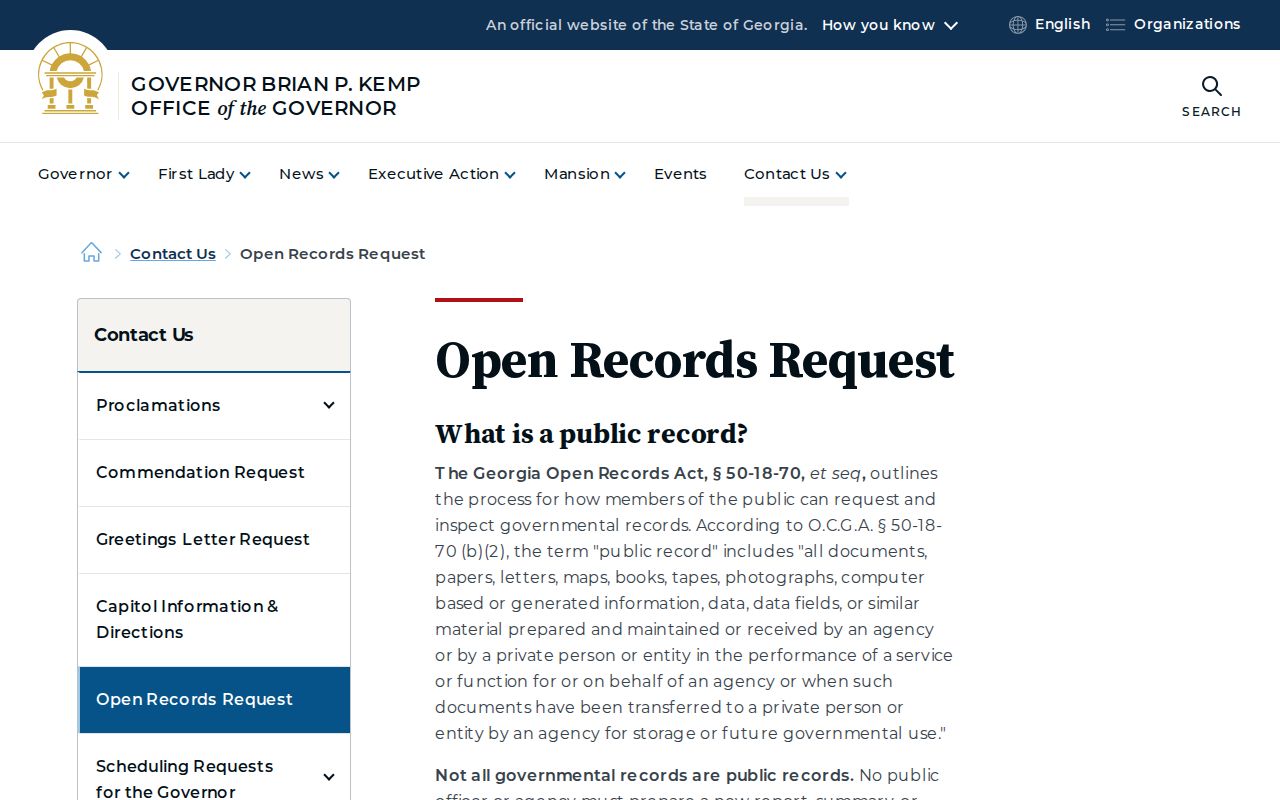
Other Georgia agencies and county offices may use email, mail, their own form, or an in-person counter, so follow the chosen custodian's instructions.
Lawful personal use. Never use a record to stalk, threaten, harass, or expose protected details. Georgia stalking and harassing-communications laws can apply to misuse.
When Georgia Public Records Are Not Online
Not everything is online. GSCCCA participation and image dates differ, court systems use several vendors, probate coverage is uneven, and rural or historical series may remain at a counter or on microfilm. The strongest fallback order is the custodian's counter or phone line, a narrow copy request by email or mail, and then the Georgia Archives or a local repository for transferred and historical material.
Scams often exploit the gap between an index and an official copy. An expensive deed-copy notice, property-alert enrollment pitch, unclaimed-money fee, or fake certificate seller may resemble government mail. Verify the domain and call the custodian through an independently found official number. A recorded instrument is often available from the clerk, and a private solicitation is not a government bill.
Where a public document contains an exposed identifier, report it to the recording clerk rather than republishing it. Safe at Home substitute addresses, protected officials' details, and statutory redactions take priority over convenience. The sound endpoint is always the same: verify a clue with the office that holds the source record.